
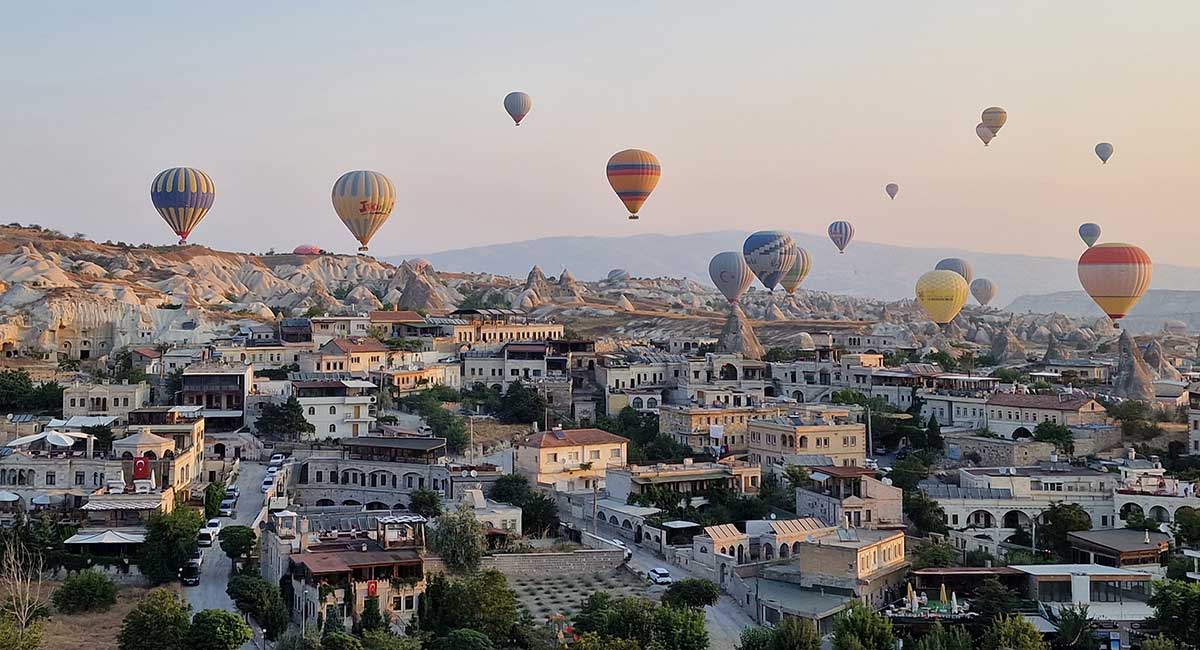
Through the Red Tour you will explore the enchantment of Cappadocia’s most scenic places. You will admire the “Fairy Chimneys” in various colours and shapes, such as the curious “mushrooms” of the Paşabağ Valley, the “animals” of the Devran Valley, the legendary “Three Beauties” of Ürgüp, and the majestic “castle” of Uçhisar. You will discover how nature created these rock formations and how man has carved out houses, monasteries, churches, and dovecotes over the centuries. After admiring the spectacular colours of the Rose and Red Valley and exploring the Zelve Open Air Museum, a tasty typical lunch awaits you at the Kings Valley eco-farm, nestled in a lunar landscape. Finally, you will participate in an engaging pottery workshop in Avanos. Are you ready to give shape to your creativity?

Cappadocia is situated in the heart of Anatolia, also known as Asia Minor, corresponding to the Asian portion of Turkey. According to some, the name “Cappadocia” derives from a Persian phrase meaning “land of beautiful horses”. In fact, this region has been renowned for its high-quality horses since ancient times. Due to its strategic location, Cappadocia was the cradle of ancient civilizations such as the Assyrians and Hittites. In addition, it was a key trading crossroads along the Silk Road, as well as an area of conquest by several peoples throughout history, including the Phrygians, Persians, Romans, Byzantines, Seljuks, and Ottomans.
Therefore, it is not surprising that the archaeological, artistic, and natural wonders of Cappadocia have been attracting the attention of scholars and tourists from all over the world for years. UNESCO has included in the World Heritage List the Göreme National Park and the cave sites of Cappadocia, and more specifically the cities of Nevşehir, Ürgüp and Avanos, the sites of Karain, Karlık, Yeşilöz, Soğanlı and the underground cities of Kaymaklı and Derinkuyu.
Cappadocia stands out as one of the most enchanting places I have ever visited and has earned a cherished spot on “my places of happiness” list, beckoning me back at times to relive the unique emotions and joy it imparts.
Why ``my`` Red Tour?
I titled this article “my” red tour, because the itinerary of the tour may have slight variations depending on the travel agency you turn to. My beautiful tour was organized by Kelebek Travel, the partner agency of the Kelebek Special Cave Hotel where I stayed in Göreme.
I chose a guided tour to optimize the use of my time without having to plan the itineraries and transfers on my own. I wanted to enjoy the beauty of the places without stress and learn their history from an expert who could make me discover hidden treasures. My guide Ozre led a fantastic tour, taking me to lunch in a special place that I would hardly have found on my own. I will tell you about it soon.
Between a group and a private Red Tour, I chose the latter because I wanted to manage the layover times at each attraction according to my preferences and take the photographs calmly. Attractions visited through the Red Tour include the most famous Fairy Chimneys.
What are Fairy Chimneys?
These are tall tuff spires characterized by a harder rock formation on their top placed like a hat. The scientific name of these pinnacles is hoodoos.
Millions of years ago, there were several active volcanoes in Cappadocia. Ash and lapilli sprinkled the landscape and, as they cooled, turned into large layers of soft tuff. Lava flows sealed the underlying layers, forming a solid, slender layer of andesite or darker basalt. As the weather became colder, torrential rains gave rise to fast and powerful streams that easily sculpted the tuff, causing slower erosion of the harder surface layers. The erosive processes continued for a long time and together with the wind shaped the landscape, creating gorges and valleys marked by the characteristic hoodoos. These formations vary in hue depending on their mineral composition and the conditions of exposure to erosive agents.
Why are hoodoos called ``Fairy Chimneys``?
According to a legend, giants lived in the mountains of the region. When they got angry, they threw flames from mountain peaks towards the villages below. One day, the sultan of the fairy kingdom arrived in Cappadocia and, seeing the plight of the local population, called all the fairies for help.
With their hands full of snow and ice, the fairies attacked the places from which the giants threw the fire, managing to extinguish it. The frightened giants fled underground and never reappeared. Humans settled in the caves they had carved out of the rocks, while fairies settled in the tops of these rocks. Thus, the two peoples lived together in peace.
So far, it is a nice legend, but what do chimneys have to do with it? Fires were lit inside the hoodoos to cook food and keep warm during the cold winters. Since there was no coal in the region and timber was scarce, dried manure was burned! The smoke coming out of the top made the hoodoos resemble chimneys. The fairy-tale and enchanted appearance of these rocky chimneys puffing smoke and the legend of the fairies gave rise to the expression ” Fairy Chimneys”.
And now, let’s start our Red Tour!
Paşabağ Valley or Monks Valley
The Paşabağ Valley, also known as the Monks Valley, is a spectacular area located between Göreme and Avanos. The name Paşabağ comes from the combination of the words Paşa meaning “pasha” and Bağ meaning “vineyard”. This name has an interesting historical root, as some of the farmers who cultivated the vines in this area were veterans of the War of Independence of the Turkish Republic. Since the title of “pasha” represented the highest rank in the Ottoman army, the locals decided to honour these veterans by calling them “pasha.”
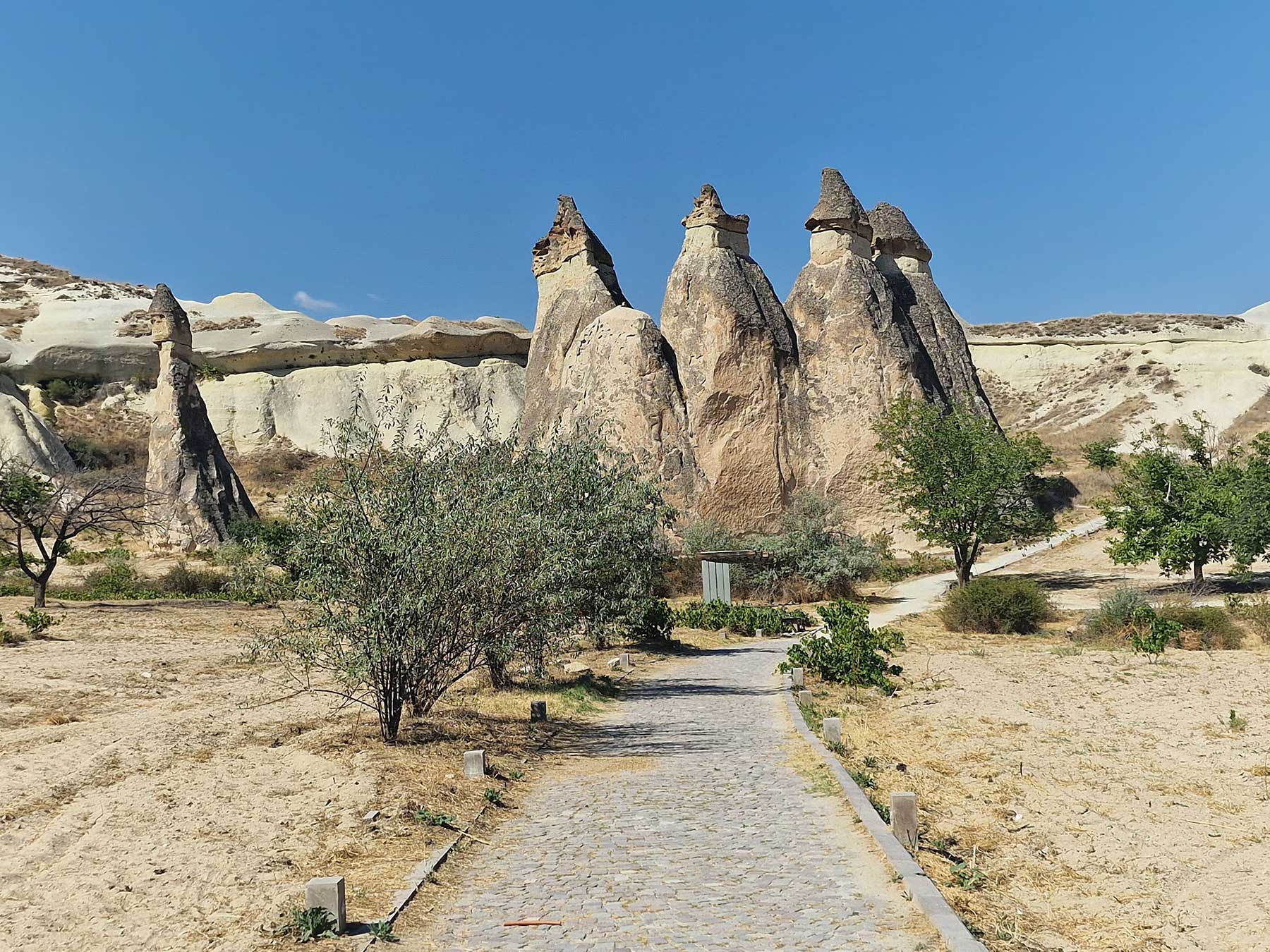
On the other hand, the name Monks Valley refers to the fact that this valley has been a refuge for hermit monks since the fourth century. Many of the dwellings and places of worship they carved into the rock can still be seen in this valley.
Among the most significant rock formations in this area is a solitary three-headed cone that houses the chapel dedicated to St. Simeon. When I was in Cappadocia, the chapel could not be visited internally because it was being restored. From the outside, however, it was possible to glimpse both frescoes, made by applying pigments on wet plaster, and secco paintings, made by applying the colour directly to the dry plaster. It is important to note that the famous St. Simeon known as the Stylite never lived in the Monks Valley. He lived in Syria at the top of a column (stylos in ancient Greek), which is why he was called “the stylite”. Then, why do we find a chapel dedicated to him in the Monks Valley? The fairy chimneys in the valley resemble the shape of a column, suggesting the possibility that some of Simeon the Stylite’s followers lived here.
Zelve Open Air Museum
Not far from the Monks Valley, is the Zelve Open Air Museum that spans three valleys that outline a Y-like path. Zelve is an extraordinary city carved into the rock, dotted with houses, places of worship and centuries-old buildings that were once home to one of the largest communities in the region. Some churches date back as far as the sixth century! In this community, Christians and Muslims coexisted until 1924, when Christians were forced to leave the place following the ratification of the Treaty of Lausanne. It was an international agreement that ended the war between Greece and Turkey and sanctioned the exchange of minorities between the two countries. The exchange involved the transfer of Greek populations living in Turkish territory and Turkish populations residing in Greek territory. In the 1950s, Muslims were also forced to evacuate the area due to the risk of erosion, and founded a modern village not far away, called Yeni Zelve (New Zelve).
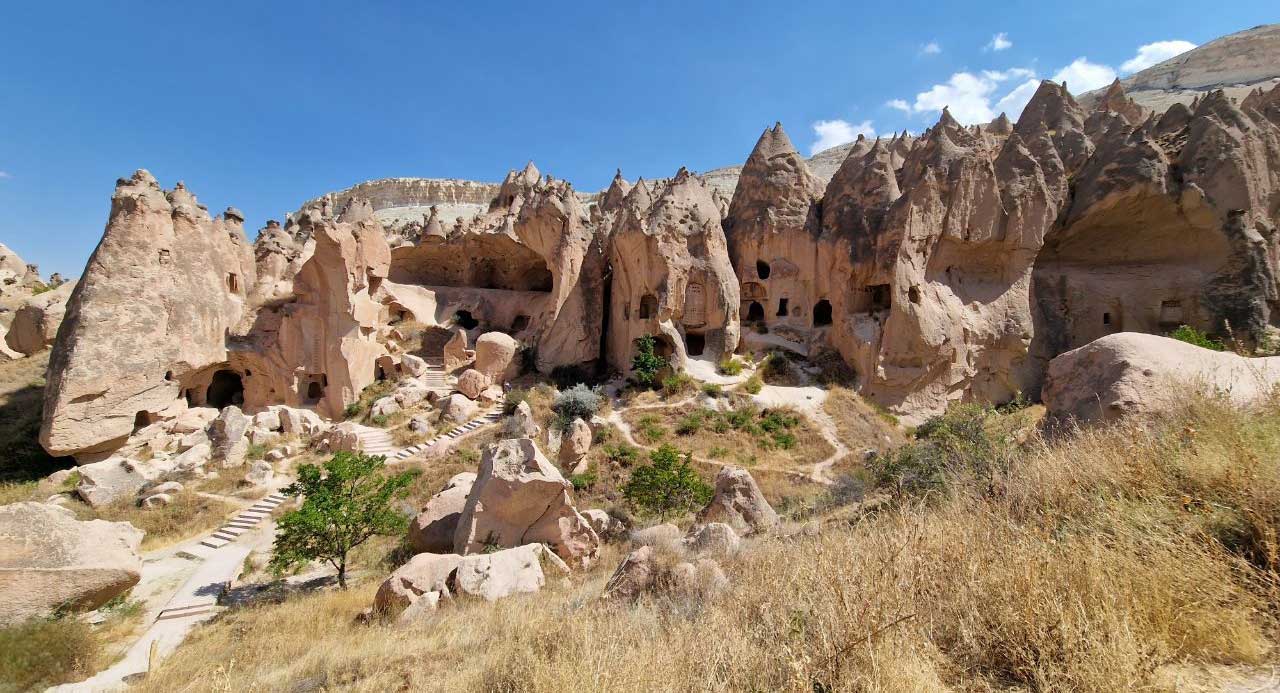
The churches I visited in the first valley had paintings depicting fish and grapes, two important religious symbols. During the time of persecution against Christians, in fact, the fish symbolized Christ. In ancient Greek, the word for fish was ἰχθύς, which is also an acronym for “Jesus Christ, Son of God the Savior.” The grapes, on the other hand, symbolize the blood of Jesus and therefore his sacrifice. Unfortunately, I couldn’t take pictures of the frescoes because it was forbidden.
I decided not to continue with the exploration of the other two valleys because the heat of that August day was torrid, and in any case some more distant structures could not be visited due to the restoration work in progress.
Interestingly, some travel agencies include the Göreme Open Air Museum in their Red Tour, instead of the Zelve Open Air Museum. Both are worth a visit. The former focuses mainly on cave monasteries and their frescoes, while the latter also includes non-religious environments. However, it is important to point out that while the church paintings in the Zelve Open Air Museum are less well-preserved, the place is less crowded and touristy.
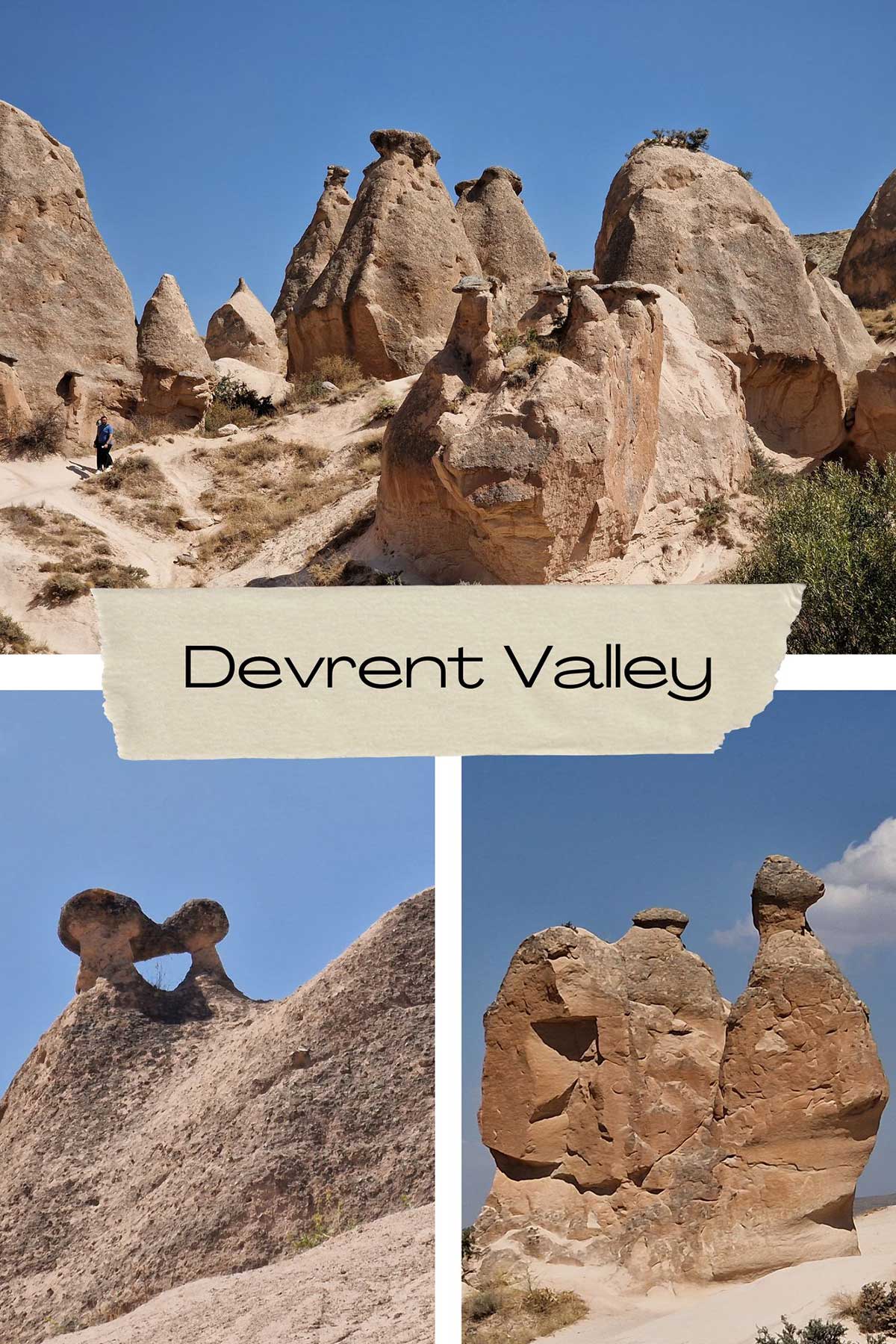
Devrent Valley
This valley is also known as the Imagination Valley. This valley has never been inhabited, but it is famous for its lunar landscape with animal-shaped rocks. Thanks to your imagination, you will be able to recognize various animal shapes. Which animals can you identify in the two photos below?
The Three Beauties

The Three Beauties are one of the most photographed attractions in Ürgüp and in whole Cappadocia. They depict two adults and a child who are the protagonists of a moving legend. Once upon a time in Cappadocia, there was a king who had a beautiful daughter. The princess was in love with a shepherd, but the king stood in the way of their love. The princess decided to elope with her lover and a child was born from their love. When the king heard about this, he was furious and ordered his soldiers to find his daughter and her family. Hunted by soldiers, the princess asked God not to separate her from her family. Her wish came true and the three were turned into spires of rock.
Rose and Red Valley
During the tour we made a stop at a viewpoint to admire the Rose and Red Valley. This spectacular valley is located just outside Göreme. It is especially beautiful at dawn and dusk when the sunlight enhances the reddish and pinkish hues of the rocks. Among other things, this valley is an ideal place to go hiking and admire the flight of hot air balloons at dawn.

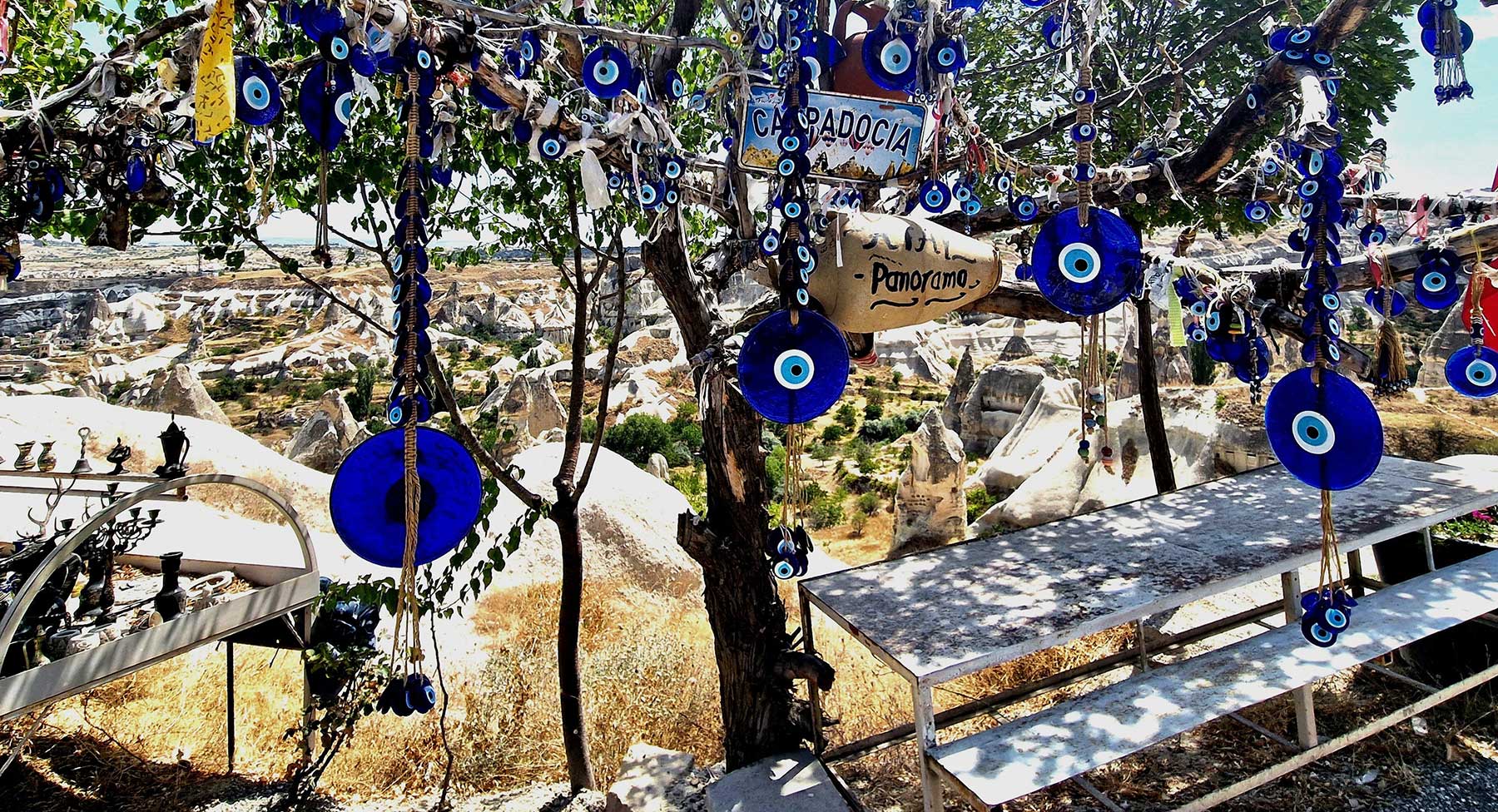
Panorama Atay
At this point I made a panoramic stop. There are various stalls and a tree adorned with “evil eyes” of all sizes. In Turkey, all souvenir shops sell these eye-shaped amulets that protect against the negative energies emanating from envious people. According to the locals, if the amulet breaks, it means that it has done its job and protected its owner. If you want to buy it, make sure it’s made of glass and not a piece of plastic.
Love Valley

This is one of the valleys with the most peculiar fairy chimneys. If you take a good look at their shape, you’ll understand why it is called Love Valley.
Castello di Uchisar
Dating back to ancient Roman times, Uchisar Castle is made up of interconnected rooms, joined by stairs and tunnels carved into the rock. It is characterized by imposing millstone gates, similar to those used in the picturesque underground villages of the region, which once served to regulate access to these defensive bulwarks. Originally, its rooms served as dwellings. In most of them, dovecotes can be seen, where farmers collected pigeon guano that was used as agricultural fertilizer and to create pigments for painting.
Not far from the castle, you will find the headquarters of the local gendarmerie and two cafes. On the other side of the castle, you will find cozy hotels that offer a unique stay in this charming historic setting.

Lunch in Kings Valley
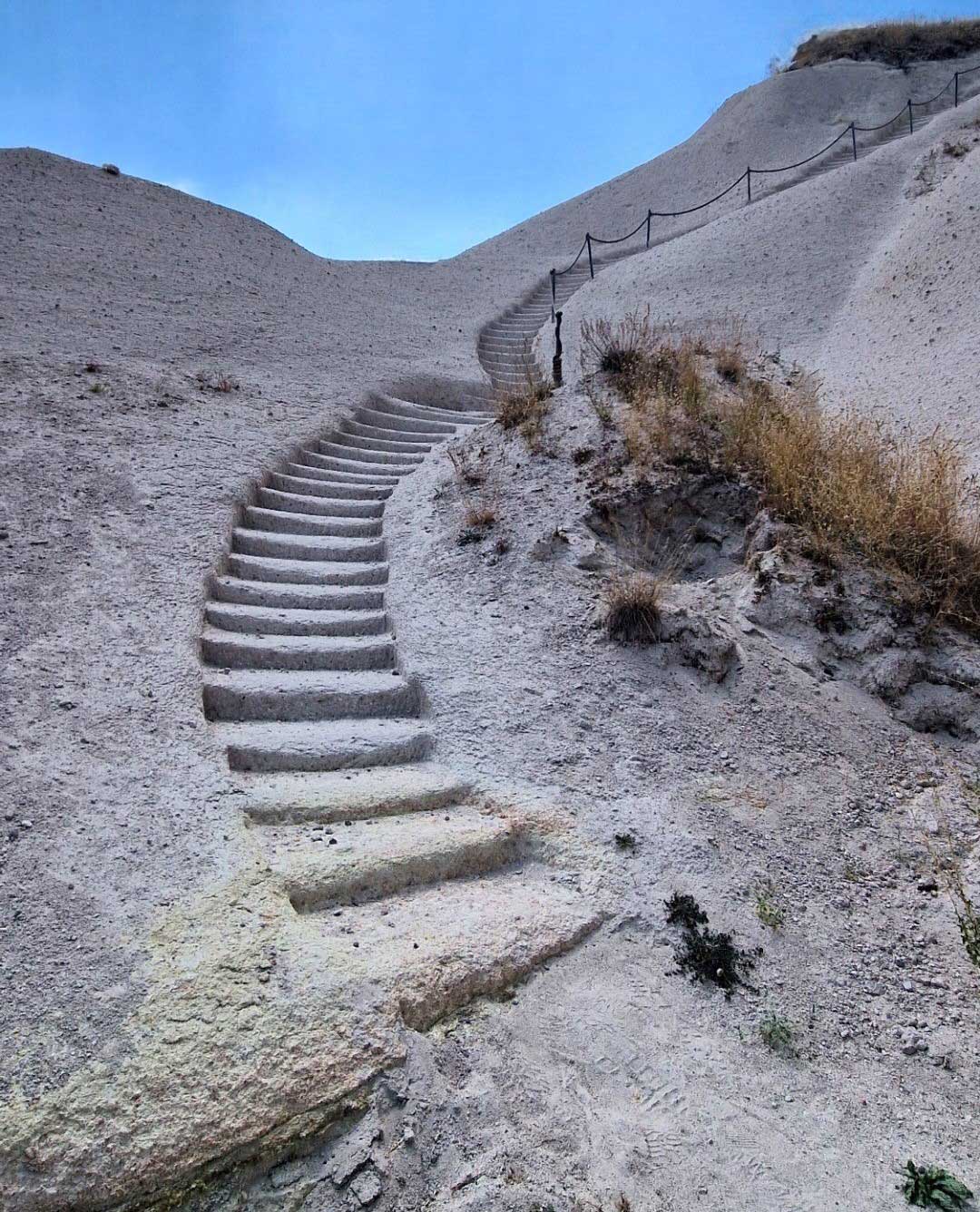
Lunch at Kings Valley was truly a highlight of my tour. This is an enchanting farm specialized in the production of organic products where I enjoyed an exquisite lunch, immersed in the wild beauty of the surrounding nature. To reach Kings Valley I crossed a pumpkin patch and then descended a staircase carved into the rock from which I could enjoy a spectacular landscape.
I savored a great lentil soup, dolma (vegetable rolls stuffed with rice seasoned with herbs and spices), sarma (vine leaf rolls stuffed with bulgur) and beans. At the end, I enjoyed a small glass of excellent Turkish tea. At this farm you can also have breakfast, attend cooking classes, and buy jars of homemade jam.
But how many bees! After all, I was in the open country. Luckily, I discovered a local secret to keep them at bay: the smoke of burnt coffee. A small discovery that made the experience even more authentic.
Güray Müze – Underground Museum of Ceramics
After lunch we continued to Avanos, a small town located along the Kizilirmak (Red River), so called because of the red clay that covers its banks. Avanos has been renowned for pottery since the time of the Hittites. Traditionally, in Avanos it was believed that a girl could not marry if she was not able to weave carpets and a boy could not take a wife if he did not know how to work with pottery.
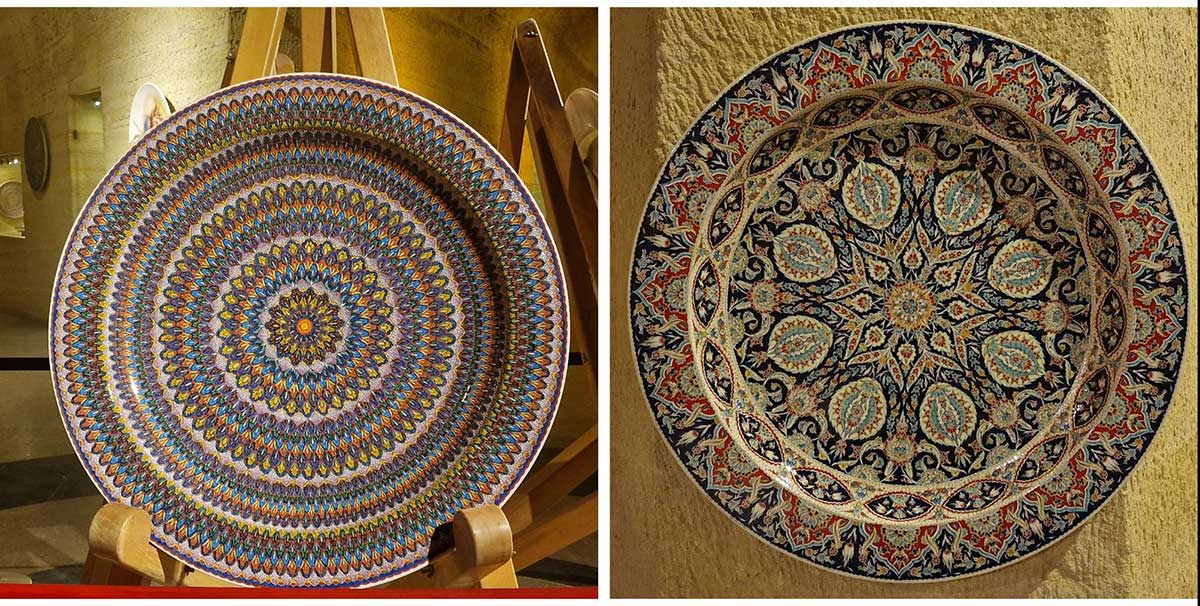
I visited a very interesting museum and pottery workshop called Güray Müze. The museum section exhibits ceramics from various periods, from the oldest to the most modern.
However, the most exciting part was the workshop where I was able to learn the process of making ceramic artifacts, from their processing on the potter’s wheel to the meticulous decoration by hand.
I even experienced the thrill of creating a small clay vase myself, with the help of an experienced and very patient master. It was beautiful to shape the clay with my hands. I felt like I was playing in the famous scene starring Demi Moore in the movie “Ghost”… but without “partner in love”!
Before leaving, while I was passing in front of the museum shop, it was impossible for me to resist the beauty of a centrepiece, which is now in my dining room.
Is the hot air balloon flight part of the Red Tour?
The hot air balloon flight is not included in any of the standard Cappadocia tours, it is an activity to be booked separately. There are many agencies that organize hot air balloon flights, but the quality of services can vary greatly. Therefore, I recommend that you consult your hotel to make the best choice.
Keep in mind that hot air balloons only take off when the weather conditions permit a safe flight. If you are considering a hot air balloon flight or just want to watch balloons from a vantage point, it is advisable to plan a multi-day stay. During my four days in Cappadocia in August, the hot air balloons took off only once. In addition, you need to get up very early to enjoy this amazing experience. If you are staying in Göreme, which is close to the take-off location, the pick-up service is expected around 4:45 am!!
After the hot air balloon flight and a well-deserved breakfast, you can opt for a relaxing Turkish bath (hammam) or, if you have the energy, continue with a Red or Blue Tour. I do not recommend the green tour on the same day as the hot air balloon flight, as this tour is long and quite physically tiring. So, it’s not ideal when you must get up at 4:30 in the morning.
What else to do in Cappadocia besides the hot air balloon flight and the Red Tour?
- A Green Tour (South Cappadocia) – Read about my experience in this article: My Green Tour in Cappadocia: Kaymakli Underground City, Ihlara Valley & Selime Cathedral.
- A Blue Tour (East Cappadocia) – Read about my experience in this article: My Blue Tour of Cappadocia and its secret treasures.
- Visit the Göreme Open Air Museum or the Zelve Open Air Museum, depending on which attraction is not already included in your Red Tour.
- See a Whirling Dervishes ceremony – Read about my experience in this article: Whirling Dervishes in an atmospheric caravanserai in Cappadocia.
- Camel safari
- ATV safari
Your hotel can surely help you with your reservations, or if you prefer, you can contact a local agency independently or book on portals such as GetYourGuide and Viator. Beware of “rip-offs”! As always, I recommend that you read the tour reviews and be aware of the tour group size.
Safe travels!