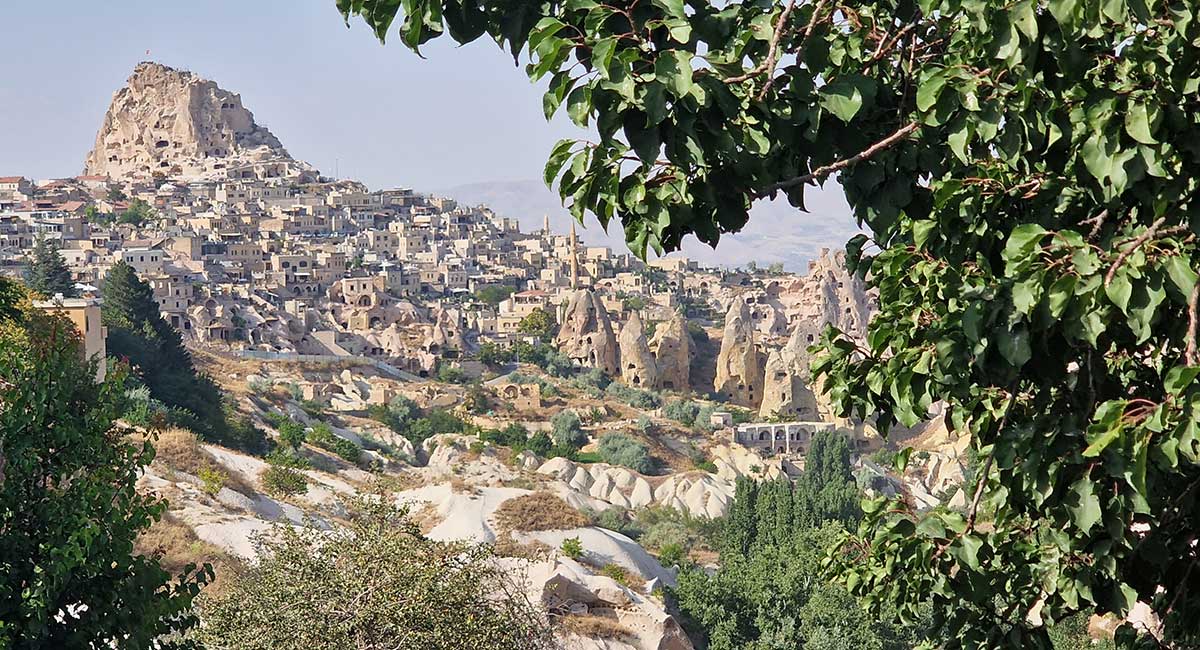


In the Blue Tour, you will discover the beauties of the eastern part of Cappadocia off the traditional tourist circuits. You will explore the charming town of Mustafapaşa, the atmospheric Keşlik Monastery, the verdant Soğanli Valley with its ancient cave churches, the extraordinary excavations of the ancient Roman city of Sobesos, and the incredible underground city of Kaymakli. If you love history, architecture, and wild natural scenery, you will love the Blue Tour! At the end of the tour, a viewpoint with breathtaking views will await you. Where? Read on, and you will find out.
The Blue Tour usually attracts the interest of a more select audience of visitors. Many devote only two days to their visit to Cappadocia, prioritising the more touristy Red Tour, possibly followed by the Green Tour. The Red Tour offers the opportunity to explore the region’s most renowned scenic and geological attractions, such as the Fairy Chimneys. At the same time, the Green Tour led to the discovery of Selime Cathedral, the Ihlara Valley, and an underground city (Kaymakli or Derinkuyu). On the other hand, the Blue Tour focuses less on routes with a strong visual impact and more on ancient villages, monasteries, and churches.
Since I had already visited Kaymakli on my Green Tour, I opted for a private Blue Tour, where the guide kindly replaced Kaymakli with several cave churches along the Soğanli Valley and the Taşkınpaşa Mosque. If you want to know more about underground cities, I refer you to my article on the Green Tour.
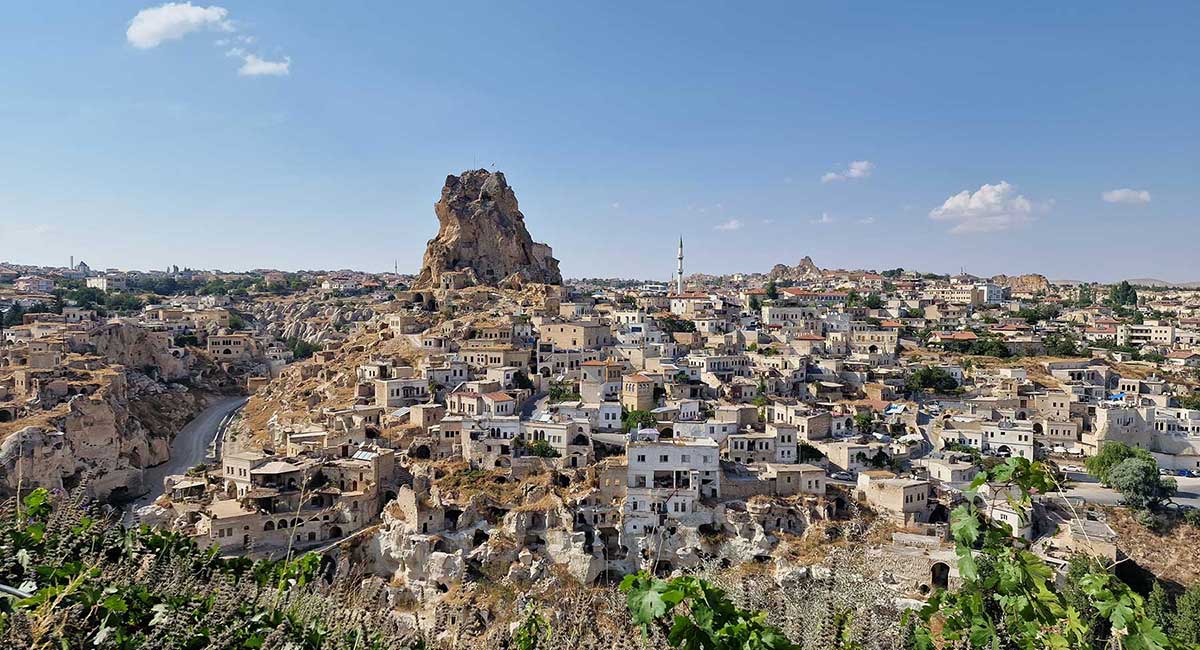
Another change to the traditional Blue Tour was replacing a stop at the rock formation known as Three Beuties, already seen during the Red Tour, with a stop at a quiet viewpoint in Ortahisar. There, I could relax and sip tea, away from the crowds, enjoying the breathtaking scenery.
Who would I recommend the Blue Tour to?
I would recommend the Blue Tour to the following types of visitors:
- Lovers of history and ancient architecture.
- Those who can be moved by ancient ruins shrouded in leafy branches, while a river echoes in the background.
- Dreamers who manage to fill the gaps between collapsed walls or fragmented frescoes with their imagination.
- Lovers of places less frequented by tourists.
Falling into all the categories listed above, I couldn’t help but appreciate the Blue Tour! However, I confess that it wasn’t really love at first sight. When it comes to painting, sculpture, and architecture I’m terribly spoiled. Living in Rome, I am “accustomed” to seeing beautiful churches in every corner of the city. Therefore, it takes a lot to surprise me! During the Blue Tour, I was initially perplexed. I found myself in front of ancient churches eroded by atmospheric agents, with ruined walls and barely visible or fragmentary frescoes, inside environments that were often dusty and unlit, eroded by atmospheric agents over the centuries.
However, I gradually recognized that these churches had a unique charm. Their aura of mystery, the sense of connection with the past and the natural context in which they are immersed have won my heart. I began to see beyond the dust and imperfections, to walk through the stories told by the frescoes, and to imagine the lives of those who had created them. In a sense, I looked beyond appearances and appreciated the profound beauty of the history and culture that these churches embrace. Thus, my Blue Tour journey defied my aesthetic expectations and opened the door to a new form of beauty that goes beyond the surface and resides in the depth of history and culture.
Are you curious to find out more about my Blue Tour? So, let’s start this adventure!
Monastery of Keşlik
This monastery, carved into the rock and set among beautiful vegetable gardens, dates to the third and eighth centuries. Later, it became a caravanserai. It includes three cemetery churches, food storage spaces, a kitchen, a refectory/school, and the rooms where the monks led their daily lives. Among the most fascinating features of this place is S. Stephen’s church, which stands out, adorned with vividly coloured frescoes. The lack of lighting required a torch to fully admire what remains of the paintings and votive inscriptions written in ancient Greek.

Mustafapaşa
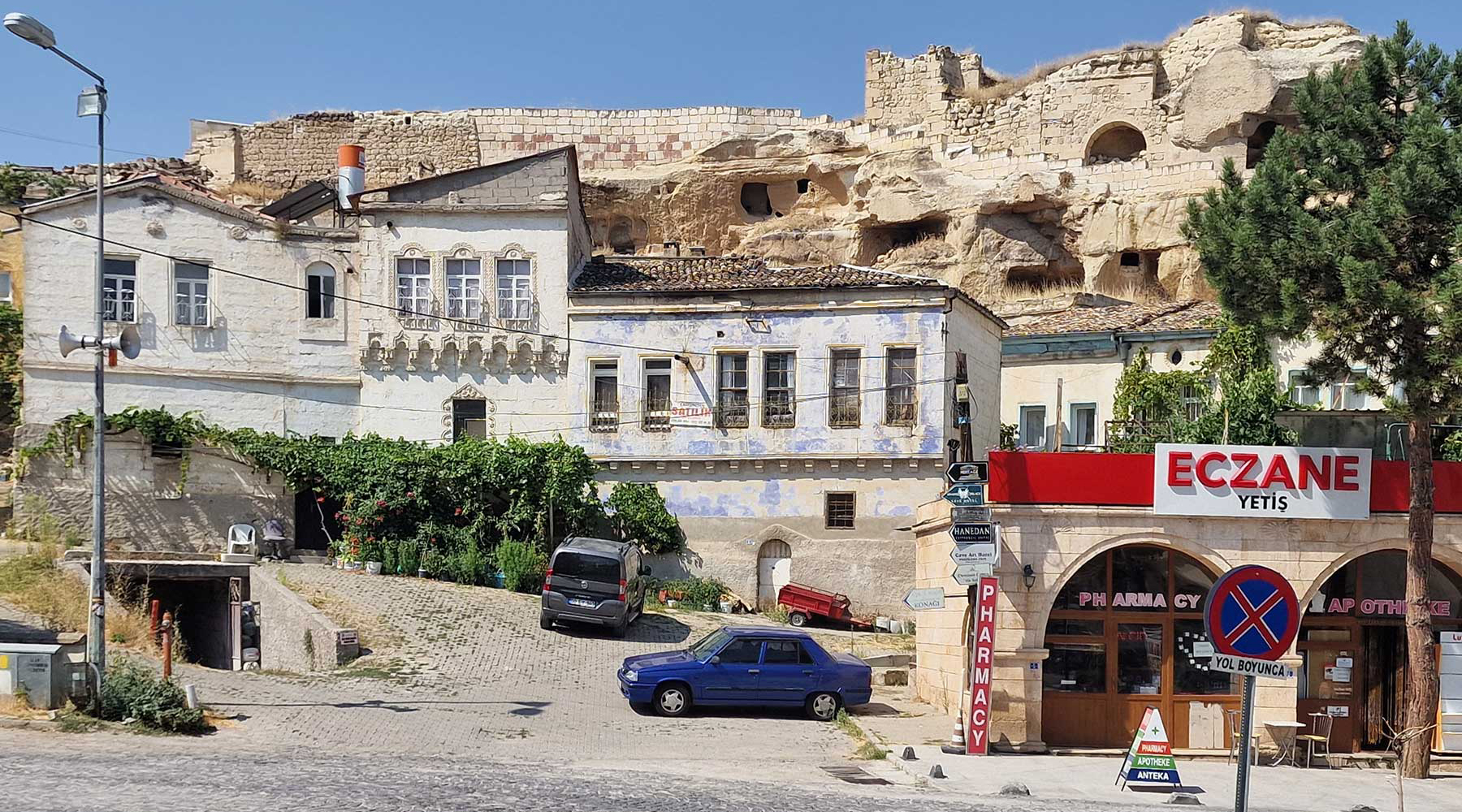
Once called Sinasos, which means “city of the sun” in Greek, Mustafapaşa is a town where a Greek Orthodox majority and a Muslim minority used to live in relative harmony. However, in 1923, the Treaty of Lausanne defined the borders of the territory of the former Ottoman Empire. It sanctioned an exchange of populations between Greece and Turkey. Christians from Turkey were transferred to Greece, while Greek citizens of the Islamic faith were transferred to Turkey. The Greeks of Synasos were not exempt from this exchange.
Entering the village, you immediately notice ancient buildings, including a large villa, which denote Greek architectural influences and their belonging to a wealthy class. The wealth of the Greeks of Sinasos came from the practice of trade, especially of fish, but also from viticulture, the cultivation of fruit trees, and construction.
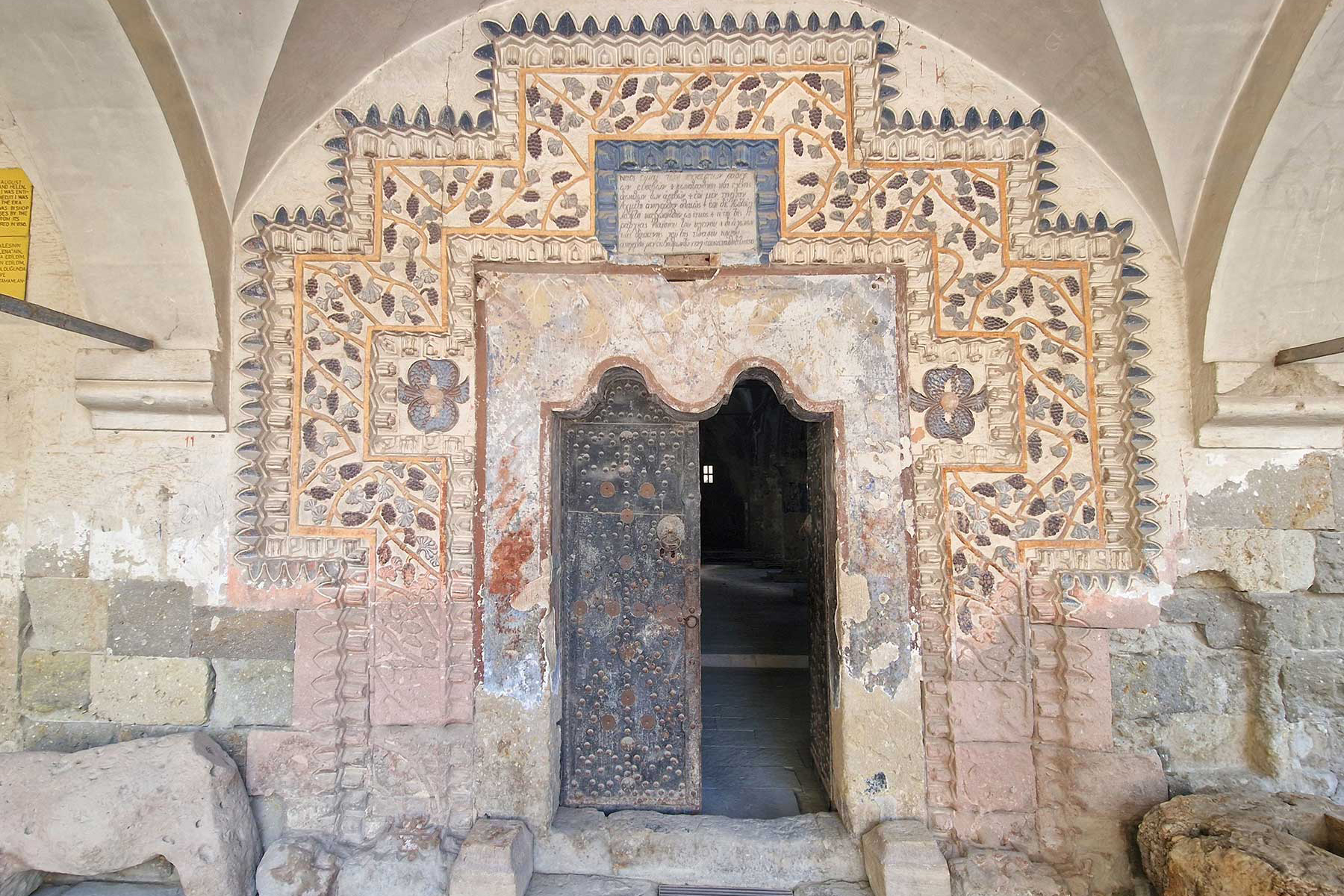
In the main square I visited Konstantinos-Eleni’s church from the eighteenth century, characterized by a beautiful portal with decorations depicting bunches of grapes. It is currently used for cultural and artistic events.
Not far from the square, you will find the university with a magnificent stone entrance with two columns capable of rotating around their axis. This feature makes it possible to report any damage caused by earthquakes or movements of the foundations.
Sobesos
Sobesos is an archaeological site of great importance, revealing the ruins of an ancient Roman city dating back to the fourth century. This precious find, which took place in 2002 near the village of Sahinefendi, offers a fascinating insight into the past. Evident traces include the baths with their wonderful mosaics, along with the Agora, the beating heart of the social and commercial life of the Roman era.

Valle di Soğanli
The Soğanli Valley is a place of stunning natural beauty. I walked along a path that wound along the valley’s slope without meeting a living soul, except butterflies, bees, and pigeons. This wonderful valley is remarkably populated by dovecotes. In the past, pigeon guano was a valuable commodity, often sold as fertilizer in Cappadocia.


During my walk through this picturesque valley, I had the opportunity to visit three unique churches. The Karabaş Church, which dates to the 6th century and was later rebuilt between the 11th and 13th centuries, features frescoes depicting vivid scenes from the life of Jesus.
Next, I stopped at St. George’s Church, which is adorned with a fresco depicting the saint in his famous clash with the dragon. Finally, I explored the Domed Church. Although it partially collapsed, this church has become my favourite. Sitting inside, surrounded by fallen stone boulders created a secret corner almost waiting for me for centuries.
Taşkınpaşa mosque
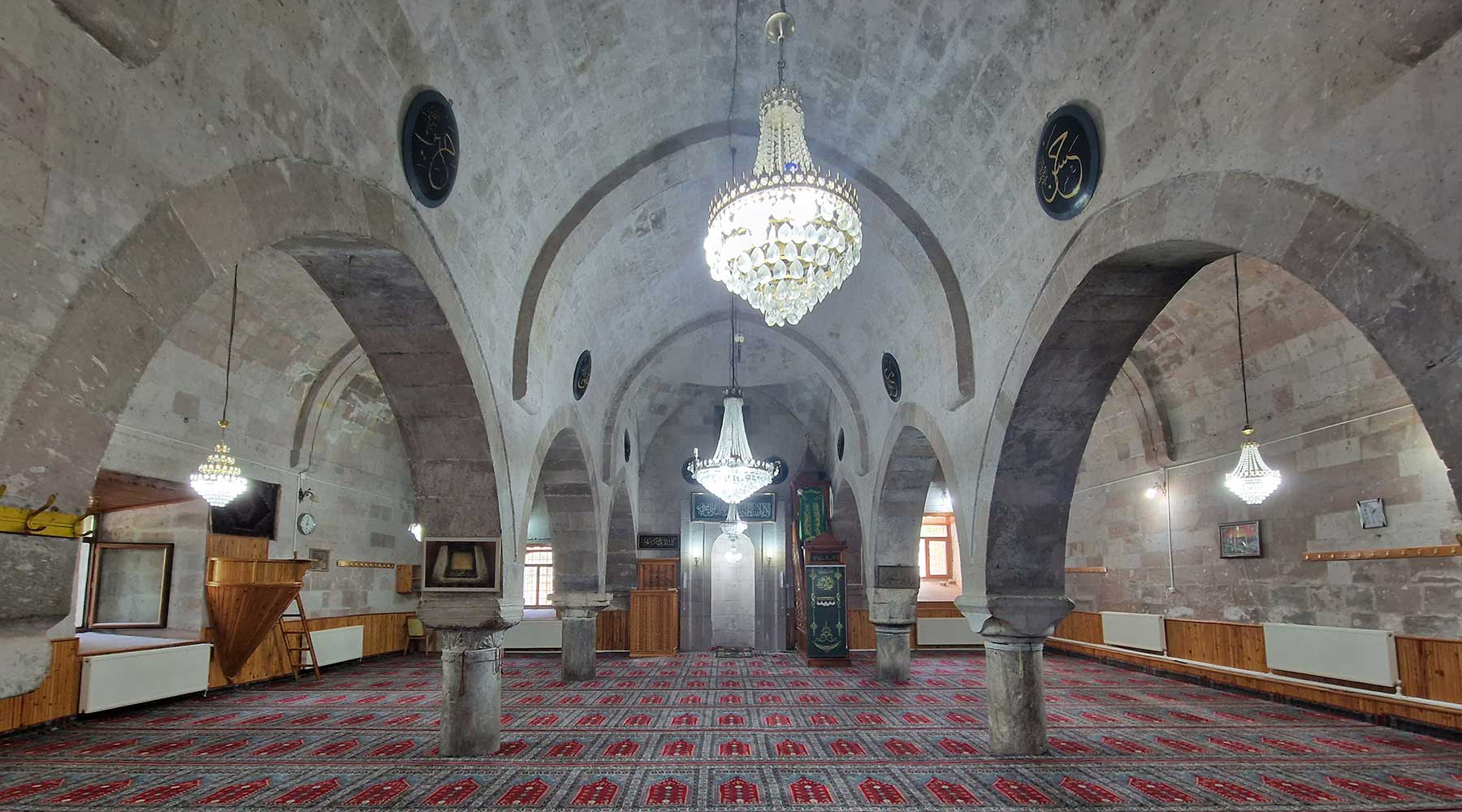
The historic building, which includes a madrasa (Islamic theological school), a mosque and two tombs, is estimated to have been built by Taşkın Pasha and dates to the 14th century. The precious wooden mihrab of the mosque has been transferred to the Ethnographic Museum in Ankara.
Remember to respect some basic rules for visiting a mosque:
- Do not enter during prayers. Muslims pray five times a day: at dawn, noon, in the afternoon, at sunset, and in the evening. The exact times change depending on the position of the sun, the season, and the place. Therefore, find out about the prayer time before the visit or pay attention to the announcement of the prayer (ezan).
- Take off your shoes. Large mosques usually have shoe racks, while at the smaller Taşkınpaşa Mosque you will have to leave them outside. Don’t worry, you will find your shoes waiting for you in this mosque
- Ladies and young ladies, cover your hair. Bring a scarf or shawl. When you arrive in Cappadocia, you can buy one to keep as a souvenir. Usually, in mosques that are tourist destinations, such as Hagia Sophia or the Blue Mosque in Istanbul, there are kiosks outside that sell disposable shawls. On the contrary, you will have to get organized at the Taşkınpaşa Mosque, which is a hidden treasure away from the tourist circuits.
- Wear appropriate clothing. If you are a woman, wear clothing that covers your shoulders, arms, and legs. Do not wear tight-fitting or see-through clothing.
- Wear a sarong over your shorts if you can’t do without them. If you are a man, remove your hat, cover your thighs up to your knees and your shoulders (so T-shirts are allowed but not tank tops).
View of Ortahisar Castle
The beauty of this place speaks for itself.

My travel emotions
The Blue Tour gave me intense and varied emotions. Some are related to the exploratory nature of the tour. I admired architectural beauties immersed in wild natural scenery, surrounded by lush woods, fragrant vegetable gardens and steep paths overlooking picturesque valleys. The experience of visiting churches with a flashlight made me feel like an archaeologist searching for an ancient lost treasure. At every step, as the guide illuminated the faces of the saints in the frescoes with the light of the torch, I experienced a feeling of revelation, as if thousand-year-old secrets were revealed before my eyes. This wonderful journey through art and history was made possible thanks to the assistance of an expert guide, who could make visible the beauty and hidden value of those walls and their frescoes.
In addition to stimulating my passion for adventure and culture, the Blue Tour also awakened my romantic side. I felt like I had stepped into a painting by William Turner or Hubert Robert, only instead of Greek and Roman ruins, I found myself surrounded by the fascinating ruins of Cappadocia. This unknown land, the grandiose and sublime natural landscapes, the ancient ruins surrounded by nature transported me to a world of beauty and contemplation.
However, the tour could awaken the romantic spirit not only in an artistic sense, but also in the most common sense of the word. It is a great tour for couples, a shared experience where you can walk hand in hand, sit on one of the many stones in the ruins and exchange a kiss. In my case, my guide’s arm occasionally supported me from slipping on the stones and ending up in an escarpment. Sometimes, the path to access the churches is quite bumpy, and you must climb stone boulders. It is nothing particularly tricky, but you must be careful.
Finally, I had the privilege of immersing myself in the flow of the authentic everyday life of the places visited, such as sitting at a café table and seeing who passes by, watching people enter and leave pot and fabric shops, people leaving mosques after prayers, and ladies sitting on the steps of their homes to prepare jars of tomato sauce. What touched me most deeply and fuels my affection for the people of Cappadocia is that, despite the language barriers that separate us, I have never crossed the threshold of a shop, restaurant or any other place without receiving a smile and a warm welcome. And smiles are more eloquent than many words.
Tips for the Blue Tour of Cappadocia
And finally, I offer you some travel tips.
- Choice of season: If you have the option, opt for a Blue Tour in spring or fall, when the weather is milder and ideal for exploring Cappadocia. During the summer, avoid the hottest hours and try to visit the Soğanli Valley early in the morning or late afternoon.
- Sun protection: During the summer, wear a hat to protect yourself from the sun and always carry water with you to hydrate.
- Proper footwear: Good quality hiking shoes are essential for tackling variable and sometimes rough terrain. They will ensure comfort and safety during your tour.
- Claustrophobia and asthma: If you suffer from claustrophobia or asthma, remember that visiting an Underground City may pose a challenge due to the narrow and low tunnels. In this case, I recommend that you opt for a private tour, which can be customized to suit your needs.
- Expert guide: Rely on an experienced guide. This figure is essential to explore places often hidden and to fully understand the monuments you will visit. With a competent guide, you can catch important details. In addition, if you are traveling alone, the presence of a guide provides safety when exploring isolated or hard-to-reach places. I relied on the Kelebek Travel agency which entrusted me to Mr. Fatih, an excellent guide.
The Blue Tour is a unique experience that can enrich your trip to Cappadocia in amazing ways. Don’t miss it!