
Johnson Space Center: VIP Tour of the Astronaut Training facilities
On this extraordinary tour, you will discover how astronauts prepare for missions. You will see the pool for microgravity simulations and many space simulators, including the toilet.
Welcome to this tour that will lead you to discover the secrets of astronaut training! You’ll start with a visit to the Neutral Buoyancy Laboratory (NBL), a large pool that simulates the microgravity conditions of space. The tour will continue at The Jake Garn Mission Simulation and Training Facility. Who is Jake Garn? Read on, and you’ll find it out. In this facility, astronauts simulate launches, landings, in-orbit appointments, and payload management. You’ll also be able to take a seat in some simulators before concluding the tour at The Space Vehicle Mock-up Facility, where you’ll see life-size replicas of spacecraft used both for astronaut training and for the analysis of technical problems. As always, I will share with you my impressions of the tour, and I will give you some tips to make the most of this fantastic experience. Are you ready? Let’s get on our mini-bus for general information about the tour and the rules to be respected!
How does the NASA VIP Tour to the Astronaut Training Facilities take place?
The NASA VIP Tour of the Astronaut Training Facilities at the Johnson Space Center is an exclusive experience that costs $199.95 per person. Ticket cost also includes a visit to the Space Center Houston, which is the museum of the Johnson Space Center. The VIP Tour – Astronaut Training lasts approximately three hours and runs from 1:00 p.m. to 4:00 p.m. on weekdays, excluding federal holidays. The VIP tour is limited to 10 participants aged 14 years and older. By joining the VIP tour, you will avoid queues, and you will be able to interact a lot with the guide, who will be at your disposal to answer all your questions as well as tell you many anecdotes and curiosities that will make your tour memorable. If you’re lucky, like I was in the NBL, you’ll be able to catch a few training sessions as well.
Can you enter the simulators?
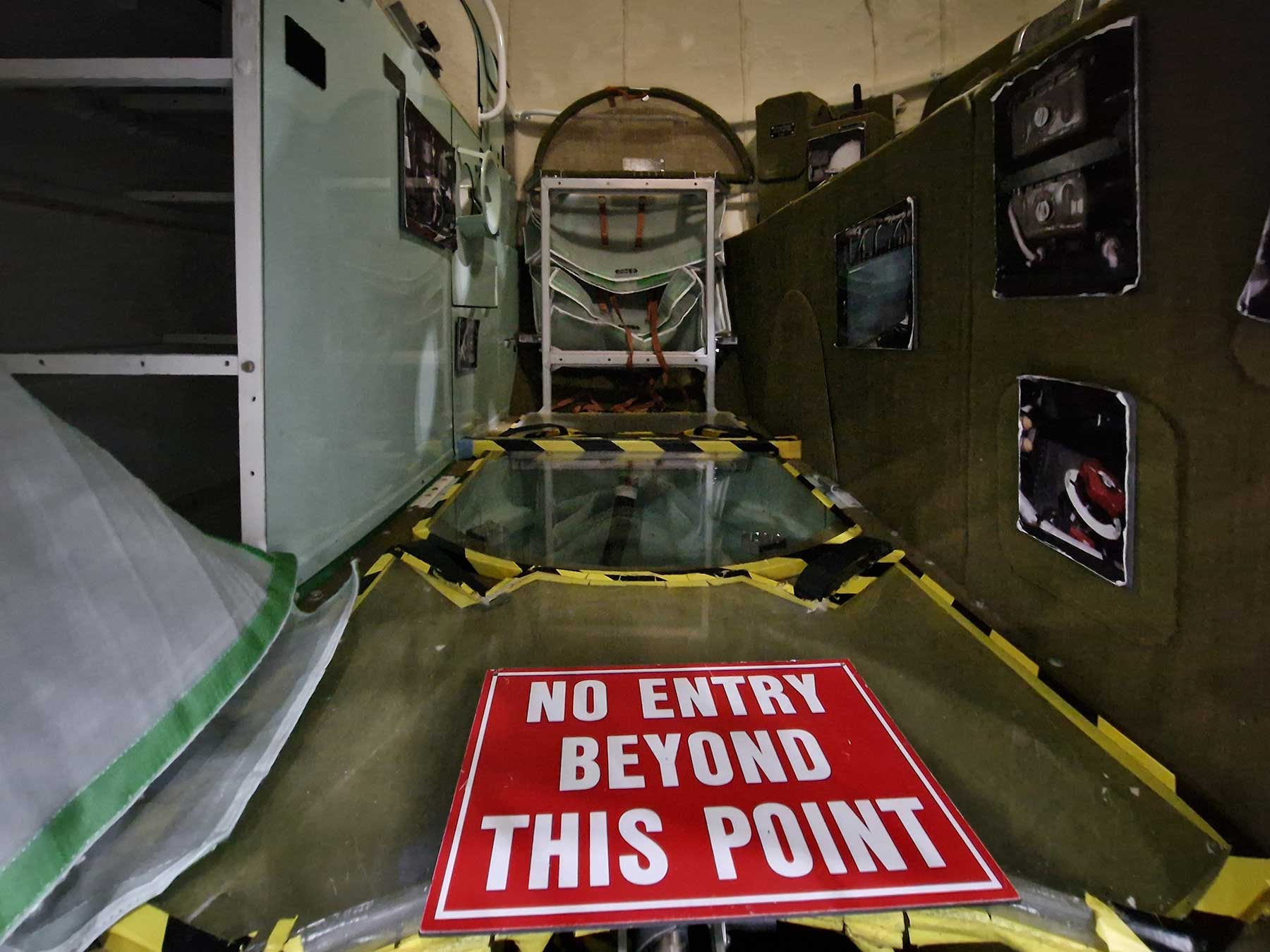
The answer is “no” and “yes”. In general, you can’t enter the simulators at the Johnson Space Center. You will see large signs everywhere that prohibit access.
However, you will have a couple of opportunities to sit in two turned-off simulators for usual photos, as I will explain shortly. Be careful not to push any button!
If you want to try out simulators in motion, you can try the ones reserved for visitors at the Space Center Houston. I tell you about it in my article titled Space Center Houston: Where the sky and dreams have no limits. They’re not the same as astronaut simulators, of course, but you’ll still experience the thrill of experiencing some movement.
Rules to be respected during the VIP Tour of the Astronaut Training Facilities
Rules are the same ones I listed in the article Johnson Space Center: VIP Tour of Mission Control. So I refer you to that article.
Itinerary of the NASA VIP Tour of the Astronaut Training Facilities
The order of visiting the attractions in the NASA VIP Tour described in this article reflects my tour experience. However, Johnson Space Center reserves the right to change the itinerary for internal needs.
1. Neutral Buoyancy Laboratory
The Neutral Buoyancy Laboratory (NBL) is at the Sonny Carter Training Facility. Sonny Carter was a NASA astronaut, a physician, and an officer in the Navy. He participated in the Space Shuttle programme, but sadly lost his life in a plane crash in 1991.
The NBL is a large swimming pool about 61.5 meters long, 31 meters wide and 12 meters deep. An environment similar to that encountered by astronauts in space is simulated, where the force of gravity is very low. In fact, we are talking about microgravity. In such an environment, astronauts float without apparent weight. In fact, neutral buoyancy is when a body immersed in a fluid appears to float without moving either up or down.
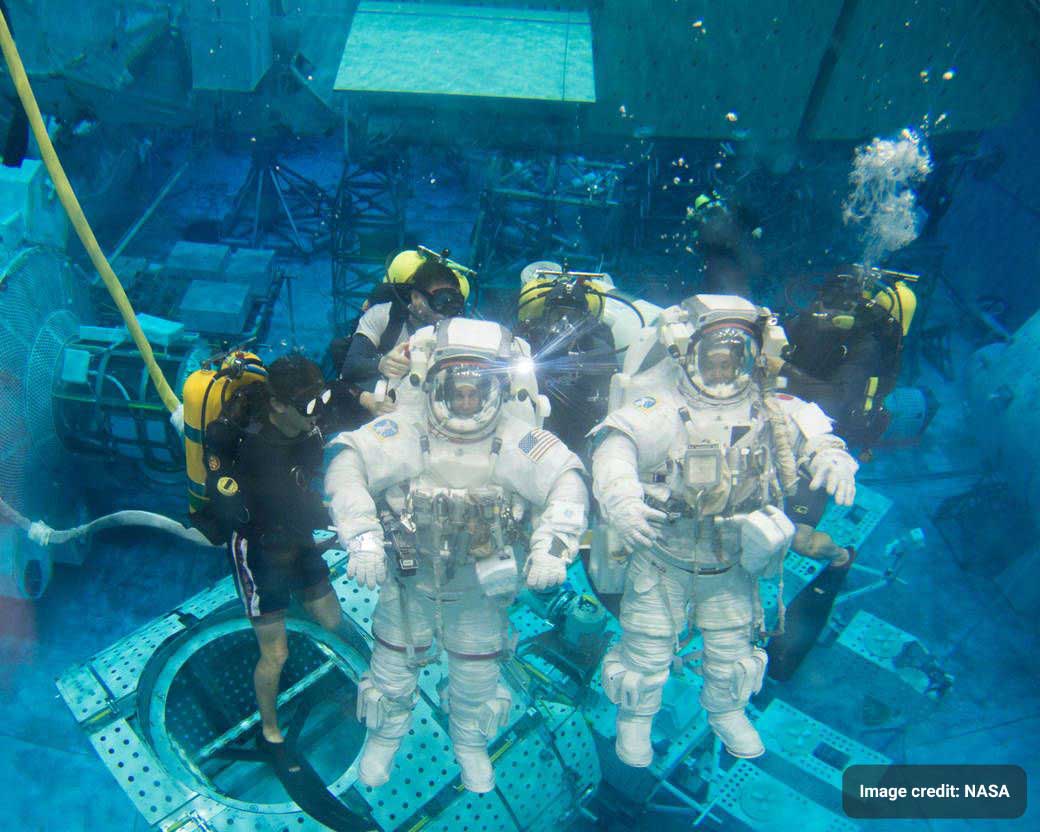
Astronauts use special equipment and wear spacesuits when they immerse themselves in the pool to perform simulated activities, such as walking, repairing equipment, assembling space structures, and conducting scientific experiments. Inside the pool is a partial replica of the International Space Station, where training takes place. If you look closely, you can see it in the photo below.
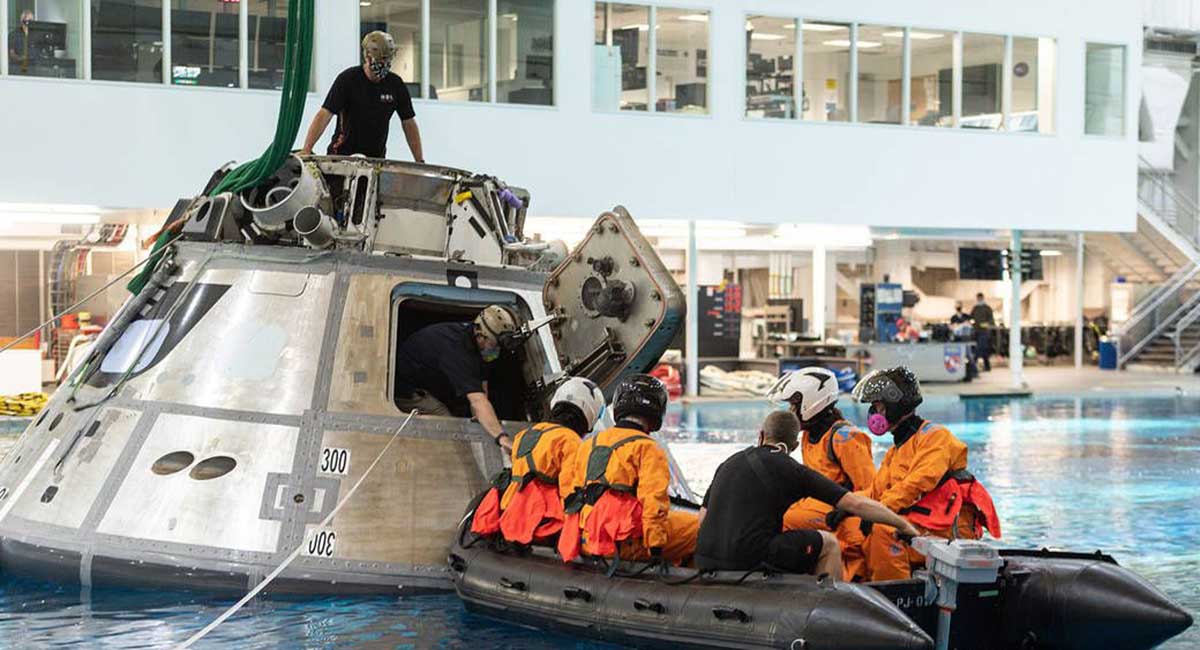
Do you see the big blue sphere emerging from the water on the left side of the photo? It is used to create waves. In the pool, in fact, the astronauts are also trained in their recovery at sea.
During the training in the pool, the astronauts are not alone. They are supported by dedicated personnel, including divers. NBL divers play three different roles. Some have a rescue role (safety divers), others bring objects to the astronauts that they have to manipulate during training (utility divers), and others are equipped with floating cameras that improve the visibility of the task performed by the astronauts (float camera divers).
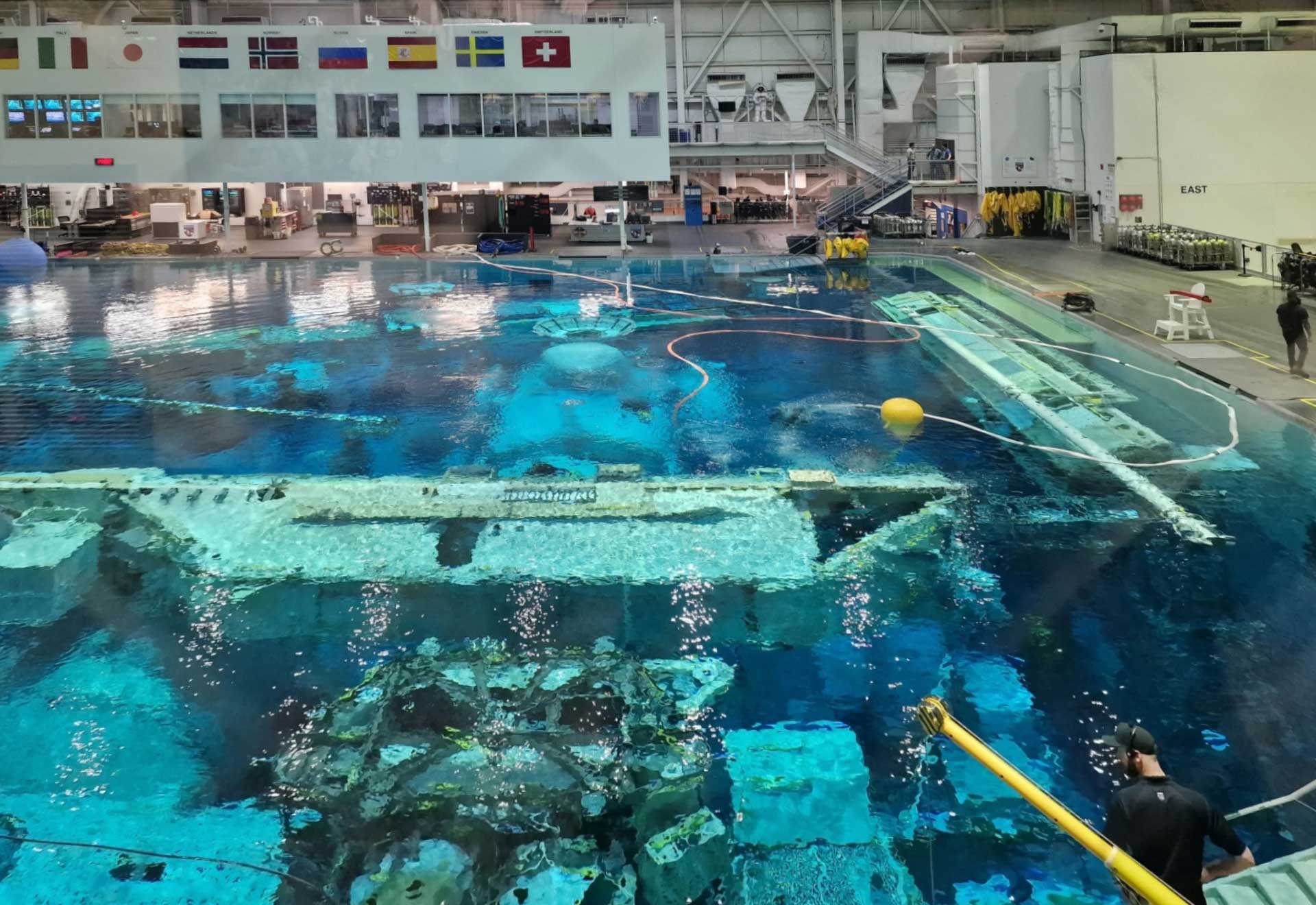
During my tour, I was fortunate because there was training going on. It was fascinating to see the astronauts and their support team at work! Visitors are not allowed to go down to the poolside. However, from the glass windows of the gallery above, you can still enjoy an excellent view and also smell a little of chlorine.
2. Jake Garn Mission Simulation and Training Facility
In the Jake Garn Mission Simulation and Training Facility, astronauts prepare for launch, landing, payload activities (i.e., payload refers to instruments, space station components, equipment, etc.), International Space Station operations, and rendezvous activities (i.e., maneuvers to have two vehicles meet up and come together in orbit).
The facility is named after Jake Garn, a former U.S. senator and military pilot who participated in a Shuttle program space mission aboard STS-51-D in 1985. During his time in space, Garn experienced severe space adaptation sickness that can occur when the brain struggles to adapt to microgravity. In honour of Jake Garn, the “Garn Scale” was developed to assess astronauts’ ability to adapt. The scale ranges from 0 to 1 Garn, with 1 representing the maximum possible level of disease. The Garn scale is still used today to evaluate astronauts before and during space flights, as part of NASA’s safety program.
As with terrestrial motion sickness, the symptoms of spatial adjustment sickness can range from mild nausea and disorientation to vomiting and intense discomfort; headaches and nausea may be present to varying degrees. For those interested, I reveal a little medical curiosity. Some symptoms of spatial adaptation sickness are like those of terrestrial motion sickness. In both cases, the brain receives conflicting information from the eyes and from the balance organ located inside the ears. When we are, for example, in a car or on a ship, for our eyes the inside of the vehicle is stationary, while our inner ear perceives the movement. In contrast, in space under microgravity, the surroundings appear visually in motion, without a corresponding sensation of bodily movement.
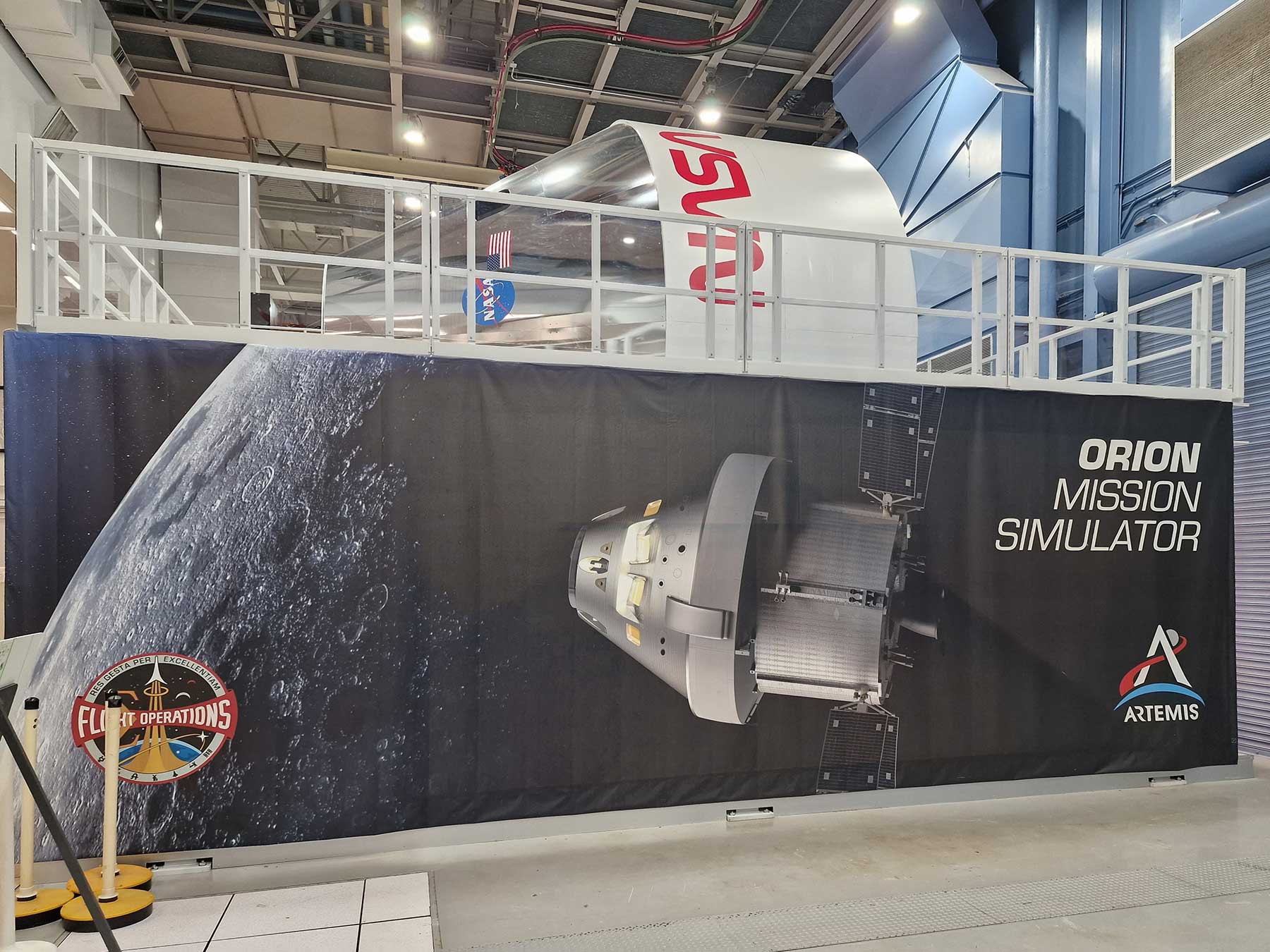
In The Jake Garn Mission Simulation and Training Facility, you will find various simulators, from those used for shuttle missions to more modern ones such as the Orion simulator and the Boeing Starliner simulator.
The Orion Multi-Purpose Crew Vehicle is a spacecraft developed by NASA to support crewed space missions. It is part of the Artemis program, which aims to return men (and women!) to the Moon and pave the way for a future mission to Mars. The first flight to the Moon took place in 2022 with the Artemis 1. The first crewed flight is planned for 2024.
The CST-100 Starliner, developed by Boeing, is a reusable commercial spacecraft designed for transporting astronauts to the International Space Station and other destinations in a low Earth orbit.

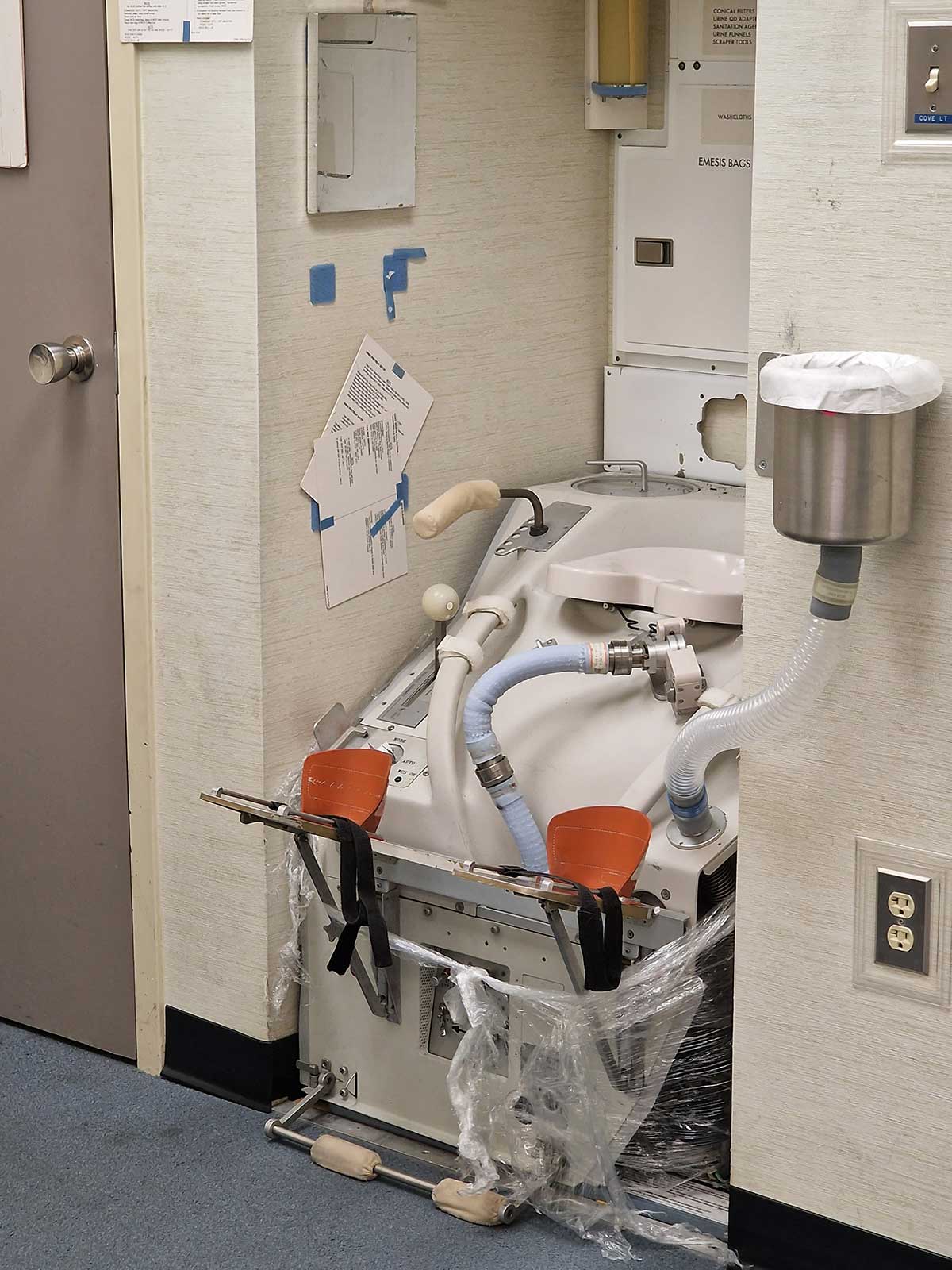
On my tour, we didn’t get into any simulators in operation. However, we were able to get into a simulator that was turned off.
A moment of great hilarity for the whole group was when we were able to sit in the training room for the use of the space toilet. Laughter has been abundant, but the subject is serious. Imagine if some “residue” came out of a WC in microgravity conditions where everything tends to float and twirl… It takes rigorous training to avoid such accidents!
At the time of the first space toilet, astronauts had to urinate standing up, while to defecate, they had to tie their thighs with straps to the toilet to maintain a good fit. As you can imagine, it wasn’t a simple procedure. Thus, in 2018 NASA improved the restroom for astronauts aboard the International Space Station. It consists of two parts: a tube with a funnel at the end for urine and a small seat for defecation. To urinate, astronauts can sit or stand and then adhere the funnel firmly against the skin. To defecate, they lift the toilet lid and sit down. As soon as the lid is lifted, the toilet starts to operate with suction to prevent excrement and odours from spilling. And what happens to urine and faeces? The urine is collected and turned back into clean, drinkable water. Astronauts, in fact, say that ‘Today’s coffee is tomorrow’s coffee!’ Faeces and dirty toilet paper are sucked into bags that are placed in airtight containers and loaded onto a cargo spacecraft. This spacecraft is launched towards Earth. Anyway, there’s no danger of anything getting on our heads! The spacecraft disintegrates in the upper layers of Earth’s atmosphere. So, you can rest assured, or almost… It is anyway possible to be bombarded by pigeons.
3. Space Vehicle Mock-up Facility
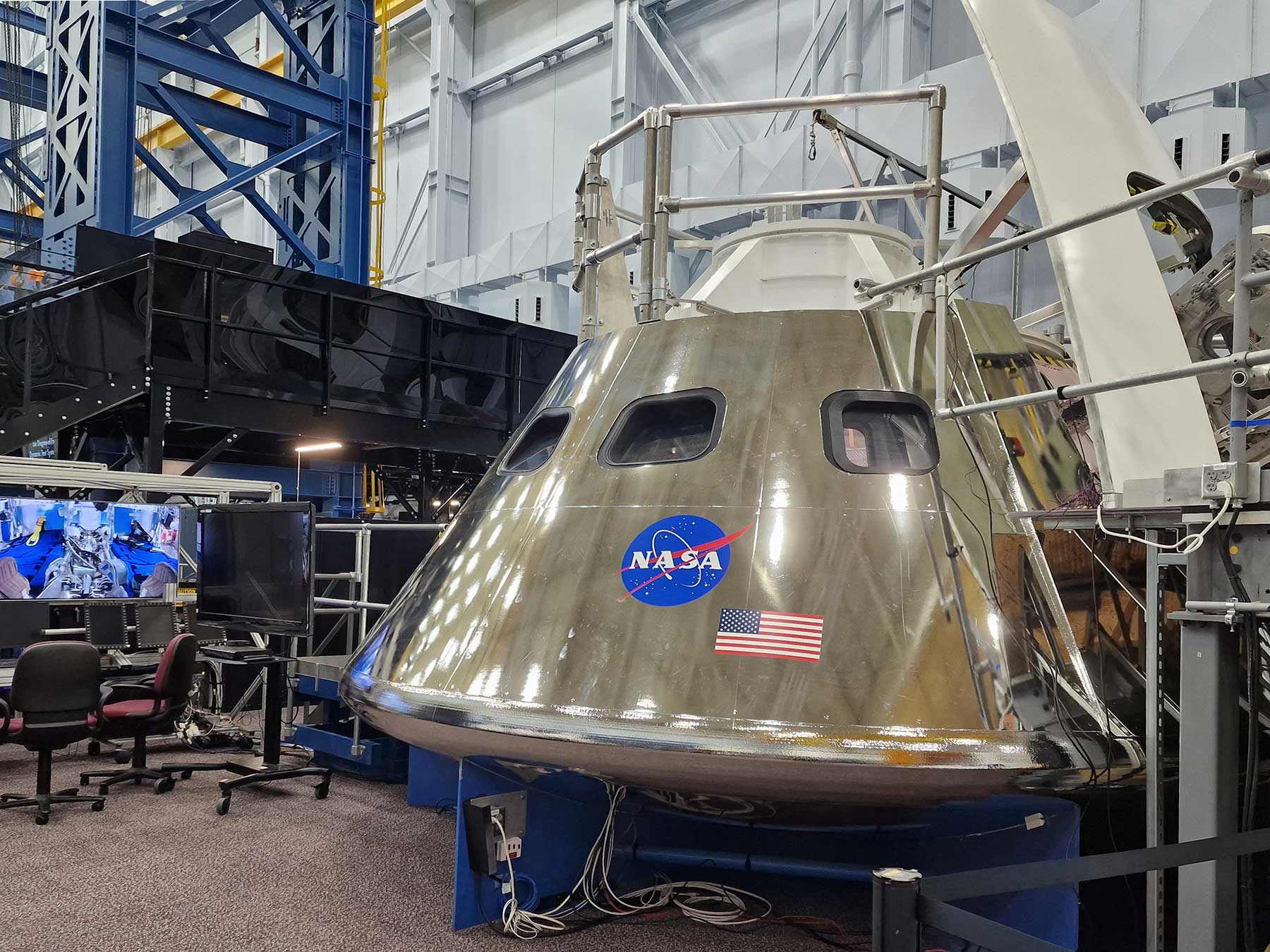
The Space Vehicle Mock-up Facility houses life-size replicas of spacecraft. The goal is to help astronauts familiarize themselves with spacecraft, understand their various systems, and prepare to handle emergencies that may occur on a mission.
Initially, the facility housed Space Shuttle training modules. After the end of the program, the shuttle modules were removed, except for a crew compartment simulator.
The facility now houses prototype rovers, i.e., remotely controlled vehicles, and other robotics projects such as Valkyrie, the new generation of humanoid robots designed to work in hostile environments. There are also replicas of International Space Station modules that help astronauts become familiar with the station before their mission. Also at this center, Orion is evaluated and tested by astronauts while engineers finalize its design.
Finally, the Space Vehicle Mock-up Facility has become an essential centre for managing problems that may arise during space missions. If, for example, a problem were to occur on board the International Space Station, a team of experts would go to this facility to resolve the situation and develop an action plan that would be transmitted step by step to the astronauts in orbit.
Tips for the NASA VIP Tour – Astronaut Training at Johnson Space Center
Tips are the same ones I listed in the article Johnson Space Center: VIP Tour of Mission Control. So, I refer you to that article.
What else can I see at NASA in Houston?
It is worth complementing the VIP tour with a visit to the Space Center Houston, which is the museum of the Johnson Space Center. In my article titled Space Center Houston: Where the sky and dreams have no limits, I described in detail what to see and illustrated the various types of tram tours that depart from Space Center Houston. You can also join the other NASA VIP tour I described in my article titled Johnson Space Center: VIP Tour of Mission Control. So, depending on the time you have and your interests, you’ll have ample opportunity to explore the Johnson Space Center.
Is the VIP Tour of the Astronaut Training Facilities or of Mission Control better?
I can assure you that both tours are outstanding! Which one is better depends solely on personal interests and tastes. In my articles on VIP tours, I have described both experiences in detail, so the choice is yours. I can, however, share here my impressions, which are entirely subjective, and the effect that each tour has had on me. The Tour of Mission Control had a more significant emotional impact on me, maybe because it was the first of two VIP tours I joined. It was really exciting to relive the Apollo 11 mission, and to see NASA scientists at work in the control center of the International Space Station. On the other hand, the tour of the astronaut training facilities offered me more moments of hilarity and satisfied the curiosity I had about the life of astronauts in space. Of course, since you’re not me, you might have different opinions! However, if you can, my advice is to go on both tours. How many times in your life will you visit NASA?